Wednesday, 20 January 2010

Shot List


The three girls seem happy and excited which is a contrast of what you would expect in a horror film.

Seeing the back of the HOODED MAN'S head is to keep him mysterious. Then tracking around him is to give a little away about the man, but not revealing to much. Also showing the evil expression printed across his face gives an idea about what he is like, and is going to do.

The superimposed image is to show a past event which has taken place in the flat and sets up an idea of what may happen in the future. Also gives a contrast with the other light hearted scenes, and is unexpected to the audience.


The scene with the OLD LADY is there to frighten the audience, as well as LAURA, as you get a clear sense that something terrible has happened in the flat before hand with the OLD LADY'S reaction, and the shot reverse shot helps to intensify the conversation.
We then see another superimposed image which enforces the first superimposed image and the OLD LADY'S reaction, to create more suspense and wonder.
When KATHERINE and MICHELLE notice the man staring at them we get a clear sense they are going to be the HOODED MAN'S next victims, and that he isn't afraid of being noticed and creeping them out before hand.
The build up to the scene with LAURA entering the empty flat is meant to be that the audience expect the other girls to have been taken already, and gives an obvious appeal of what has happened to them. The hyperbolic door bell sound links with this as you expect it to be the HOODED MAN, and creates a tense atmosphere.
However this is contradicted in the last scene with the KATHERINE and MICHELLE being at the door as it is unexpected, and allows the audience to breathe and return to the light hearted tone implicated at the beginning of the opening sequence.
We have chosen to fade to a black screen when introducing the credits as they slow the pace and intensify of the play, as well as creating more of a suspense. The black screen also helps with passage of time as they move the sequence from scene to scene, and place to place throughout the day. We have also decided to have more action than titles becuse this way is more apparent in our textual analysis of opening sequence from other films in the horror genre, rather than titles over action.


Wednesday, 9 December 2009

Treatment


Questionnaire to Target Audience and Evaluation Results


Questionnaire Results

Gender
Male- 14

Female- 26
Age

How often do you go to the cinema?
Once a month- 16

Twice a month- 10

Once a week- 2

Other- 12


What genre of film do you see?
Horror- 10

Comedy- 12

Romance- 3

Sci-fi- 2

Adventure- 7

Fantasy- 1

Rom-com- 2

Action- 2

War- 1

What is your favourite genre and why?
A lot of people voted for horror films and the reason for this was because they like the thought of being scared. There were also a number of people who voted for comedy because they like being entertained and they like a laugh. Adventure films are popular as they are interesting to watch and grab the audience’s attention. However the majority of the questionnaires were from the females. This has lead us to using vulnerable female characters as it attracts female watches as they get a clearer insight and can relate to them.

Who would you go to the cinema with? Does it change what genre of film you see?
Out of the males, some went with friends, however it was common for them to go with close family members. This reflects their ages because they’re family like wives and children. Where as half of females mostly go with friends. As an overall most questionnaires said that whoever people go with has an effect of what they see.

What is your favourite horror and why?
The results show that most people have stated that they enjoy films that have an interesting solid story line, because they are not just about death or gore yet they keep the audience interested. The majority also like films that give the sense that it could really happen to you.
Because of this we plan to set the location in a block of flats to make it seem realistic,
as well as it being near a woodland area to keep it scary. We have also said not to include any blood or gory scenes as it may look tacky and amateur. Also as we have a low budget we will not have the equipment or facilities to make it look good enough.

Describe what you look for in an opening scene of a horror film and why?
There were many different views about what people look for but an idea about what the film is going to be about, but without giving too much away, was the most apparent. There was also popularity in being introduced to charters as well as the actors playing them. Background knowledge also came up a lot. In the editing scene scary music was well-liked as was flashbacks.
We have already decided that the characters will be introduced in the opening sequence and we will need to make sure that we do not give much away so that it is interesting for the audience and makes them want to continue watching. However it will be hard to introduce background knowledge as there is no previous film, so it will need to be attractive and grabbing to keep the audience attracted to it. Also the music chosen needs to be appropriate and fit well with the genre and need to have the scary, eerie scene people look for, so that they feel uneasy and conscious.

Textual Analysis of Opening Sequence from Horror Genre

'The Strangers'
The film starts with a narrator’s voice illustrating events that have happened before the start of the film and sets the scene by explaining that a couple have just left a wedding reception on February 11th 2005. His words are written in orange on a black background, slowly moving forward then fading. He then speaks of brutal event which occur in America such as violent crimes, which gives the audience a sense of what the film is about, and making it more realistic. The picture then fades into an image of a house and then out to another, moving from day to night. The tracking camera motion gives the impression of a car driving down a road. However the visual image seems out of focus in parts, such as blurred street lamps. Whilst the images are shown there is a light swishing noise which occurs with the fades as well as instruments, acting as a kind of sound bridge. This scene creates a more mysterious feel and a wanting to see where the images are leading. The audience are then taken to bright day light where there is a tracking, long/ wide shot of two boys standing at the end of a drive. As they move towards the door we see a medium-long shot, and as they enter and begin to look around there are a series of close-ups. At this point the audience are in suspense of what they are about to find. This is apparent mainly because of the non-diegetic telephone call between a police officer and Jordan (main character). The call has been made hyperbolic to emphasise what they are saying and how scared Jordan is. In the call she is giving information about what happens in the film but before it actually happens, and without giving everything away, she also seems very disturbed and panicked which shows the terror in which she has faced. The close-ups are of a record player, a ring with rose petals, a knife, and a blood splattered wall, finishing with a medium close-up of a shot gun. These images are shown with a slightly fidgety effect as if with the use of a hand held camera. All the items link to points in the film and show the audience objects which will occur and there importance. These are being shown over the phone call which ends in the line “there’s blood everywhere”, where the screen fades to black. This leaves an unexplained situation which makes the audience feel tense and want to continue watching. The title then appears with the sound bridge of the light swishing noise and then fades back to black again to start the first scene. The effect of using the end of the film at the beginning ,showing the affect of the events which are going to take place in the film make the audience want to watch the film as they must see what happens to Jordan, and why the objects have been chosen, and have been left in the manor. The opening sequence of ‘The Strangers’ gives a slight overview of what is going to happen in the film showing the danger and terror which the characters go through.
http://www.thestrangers.net/

'Saw 111'
The scene starts with a grey background with a brick effect as if like a wall. It has whit text across the middle with a dark light covering the middle of the word, which then moves to the end with a swishing noise, which gives a mysterious vibe. The writing fades in and out and is as if moving towards you. As this is happening we hear a woman’s voice say “game over” (which is a very symbolic line from the film), followed by a man screaming in pain and shouting aggressively to the woman with sentences such as, “I’m going to kill you”. The screen then fades to black to start the action. The room is dark with the only light from a torch which is pointing at an object which takes a second to come into focus. As this scene starts there is eerie music playing of an instrument which makes it intense and interesting. We are then introduced to the main character with an extreme close up of his face. As we are shown his body with a tracking movement we see he has a normal hair style, no extensive make-up and day clothing, except with blood stains. The room is only shown with the light of the torch therefore hard to identify the location, however we do see that it is secluded and remote. The scene is as if being shot with a hand held camera as it intimately follows his every movement and consists of close-ups, medium close-ups and medium shots which show the room isn’t very big as we do not cover a lot of ground. It could also show the man’s isolation. The sounds are hyperbolic with the heavy breathing, screams, yelps, fumbling, throwing of a brick onto his ankle, and the bone breaking, even the throwing of a saw, this makes it seem very realistic and excruciating for the audience to watch as you feel the pain the man is facing, and the scary and confusing atmosphere he is in. The scene then fades to black and the title slowly fades in with the swishing noise returning. At this point the audience is hooked and would want to watch more as you have a need to see what happens to the character. The opening sequence does not give too much away however you get to see a character and a tone is set for the rest of the movie.

http://www.officialsaw.com/

Time Line of tiles from 'Saw 111'


Time Lime Comparison of 'House of Wax', 'The Strangers' and 'Saw Three'

From viewing opening sequences from other films in the horror genre we have decided that the titles we are going to use are the production company name, the associate, the composer and the title of the film. This is because all the films contained similar titles for example placing the title of the film at the end of the sequence as that is how the comparisons were. We have chosen to use a black a screen for the background as we preferred this look, and is the same style as most of the horror sequence’s we have looked at. We have chosen to hold the titles for four seconds, other than the main title of six seconds, because our opening is shorter than the films so cannot be held for a really long period of time. The title is held for longer as we decided it to be the most important for the viewer the read and remember. All the titles will fade in and out as this is a popular pattern for horror films as it seems more mysterious.


Recent films from Horror Genre

This section covers a few films from the horror genre which were successful.

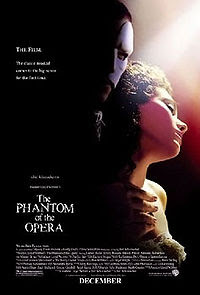
The Phantom of the Opera is a 2004 film adaptation of Andrew Lloyd Webber's 1986 musical of the same name. Directed by Joel Schumacher, the film was also produced and co-written by Lloyd Webber. The story follows a soprano, Christine Daaé, who becomes the obsession of a mysterious, disfigured musical genius known as "The Phantom of the Opera".

Studio- Really Useful Films
Joel Schumacher Productions
Odyssey Entertainment
Scion Films
Distributed- Warner Bros.
Budget- $70 million
Gross Revenue- $158.23 million

Based on 163 reviews collected by Rotten Tomatoes, 33% of the critics enjoyed The Phantom of the Opera, with an average score of 5/10. "The music of the night has hit something of a sour note: Critics are calling the screen adaptation of Andrew Lloyd Webber’s popular musical histrionic, boring, and lacking in both romance and danger," the consensus read. "Still, some have praised the film for its sheer spectacle."

Opening Sequence
The film begins in 1919, where the dilapidated Paris Opera house holds an auction in selling pieces. Raoul the Vicomte de Chagny (Patrick Wilson), now an old wheelchair-bound man, purchases a coveted music box. During the auction, Raoul spots a familiar figure: Madame Giry (Miranda Richardson), whom he met as a young man. Madame Giry is now an old woman, almost 50 years later. But he is distracted for the next piece, a broken chandelier now restored and electrically wired known as Lot 666. As the auctioneers display the restored chandelier, the opening crescendo of music wipes away the years of decay from the opera house as the black and white turns into color, and the audience is transported back in time to 1870, the beginning of the story, when the opera was in its prime.
http://en.wikipedia.org/wiki/The_Phantom_of_the_Opera_(2004_film)


The Phantom of the Opera is very different from the horror sequence we are going to make. As it has musical elements it breaks it away from the horror genre making it unique. Because of the musical production it also had an already made audience which ours obviously does not. However what we can take away form this film is that is shows how important music can be, and will influence us when choosing music.


Saw is a 2004 horror film directed by James Wan and starring Cary Elwes, Leigh Whannell, and Danny Glover. The screenplay, written by Leigh Whannel and James Wan, is based on the short film of the same name. It is the first installment of the Saw film series. The film's story revolves around two men who awaken kidnapped and chained in a dilapidated industrial bathroom. They are given instructions via a micro cassette recorder on how to escape by following the "rules" of their "game". Meanwhile, police detectives investigate and attempt to apprehend the criminal responsible — "Jigsaw".

Studio- Twisted Pictures
Evolution Entertainment
Saw Productions
Distributed- Lions Gate
Budget- $1,200,000 (estimated)
Gross revenue- $103,096,345

Critical responses varied. Some critics denounced the whole movie as nothing more than a "sadist gore fest" and a "low quality" and "cheap snuff film", while others commended its stylish visual tricks designed to camouflage cheap effects and called it a true "chilling" and "terrifying" horror film. Despite mixed reviews, Saw was a financial success at the box office.

Opening Sequence
Adam (Leigh Whannell), a photographer, and Lawrence Gordon (Cary Elwes), a doctor, awaken at opposite ends of a grimy, disused bathroom, Adam in a water-filled bathtub. Both men are chained at the ankle to the pipes. Between them lies a corpse holding a revolver and a micro cassette recorder. Adam and Lawrence discover tapes in their pockets; the men learn from both tapes that Adam must escape the bathroom, while Lawrence must kill Adam before six o'clock, or he'll lose his wife and daughter and be left to die. They find a bag containing two hacksaws, though neither is able to cut through the chains. Adam breaks his and throws it at a mirror in frustration; Lawrence realizes that they are meant to be used on their feet.
http://en.wikipedia.org/wiki/Saw_(movie)

Saw again is very different to our sequence and in some parts is the complete opposite. For example Saw throws the scene straight into the narrative which contradicts ours as we want to set up the drama first. Saw combines genre's to make it into a detective puzzle to make it more interesting. This was a thought we had at the beginning but decided against because we did not want to have to create gory scenes in our opening sequence as it would look tacky with the lack of funds and equipment we poses. This is again the opposite as Saw contains very gory elements.


Mirrors is a 2008 horror film directed by Alexandre Aja, and stars Kiefer Sutherland. The film was first titled Into the Mirror, but the name was later changed to Mirrors. Filming began on May 1, 2007, and it was released in American theaters on August 15, 2008.

Studio- Regency Enterprises
New Regency
Distributed- 20th Century Fox
Budget- $35,000,000
Gross Revenue- $72,436,439

The film received generally negative reviews. The review aggregator Rotten Tomatoes reported that 13% of critics gave the film positive reviews based on 67 reviews. Metacritic reported the film had an average score of 35 out of 100, based on 13 reviews.

Opening Sequence
The movie begins with an terrified man running across an subway platform. He ends up in an locker room, and all of the locker doors swing open. Each door has an mirror on the inside, and each stops once the mirrors are facing him. To his horror, the room's larger wall mirror begins to crack as he approaches it. He desperately apologizes to his reflection therein for running away, asking for forgiveness, he begins fervently cleaning it, and an piece of the fractured mirror falls off. He notices his reflection begins acting of its own accord as it picks up the shard of broken mirror and then slowly slashing its own throat. As the man experiences the effects of this, his throat slices open, blood erupting from the wound, despite him not doing it to himself. He collapses and dies.
http://en.wikipedia.org/wiki/Mirrors_(film)#Box_office

Mirrors is also different as it has a more complicated theme. Like 'Saw' it throws you straight into the narrative where the audience sees immediately the twisted way in which the film is written. It is presented as a detective story, truly making you think, and confusing at times. The film's protagonist is played by well known actor Kiefer Sutherland, so the film gets the advantage with the audience filled with his fans, which our film cannot compete with. However to our advantage the reviews on this film were mainly negative so we don't think this type of story will be appropriate, so will take another rout into the horror theme.


The horror film genre is very popular with a number of different ages and has a definite market appreciation. Especially with the teenage group as they just love to get scared and push their anxiety to the limit. As the genre has been around for so many years and the films are still pouring out, we can see that it is an ongoing type of movie which is going to continue striving forward with twisted imaginations and load screams making you to scared to sleep. And although many horror films initially get negative reviews the films are still watched and loved by thousands of individuals as they cater for a number of people.

History of Horror Genre

Horror Films
Horror films are movies that strive to elicit the emotions of fear, horror and terror from viewers. Their plots frequently involve themes of death, the supernatural or mental illness. Many horror movies also include a central villain.

Early horror movies are largely based on classic literature of the Gothic/horror genre, such as Dracula, Frankenstein, The Phantom of the Opera and Dr. Jekyll and Mr. Hyde.
More recent horror films, in contrast, often draw inspiration from the insecurities of life after World War II, giving rise to the three distinct, but related, sub-genres: the horror-of-personality Psycho film, the horror-of-armageddon Invasion of the Body Snatchers film, and the horror-of-the-demonic The Exorcist film.

The last sub-genre may be seen as a modernized transition from the earliest horror films, expanding on their emphasis on supernatural agents that bring horror to the world.

Horror films have been dismissed as violent, low budget B movies and exploitation films. Nonetheless, all the major studios and many respected directors, including Alfred Hitchcock, Roman Polanski, Stanley Kubrick, John Carpenter, William Friedkin, Richard Donner, and Francis Ford Coppola have made forays into the genre. Serious critics have analyzed horror films through the prisms of genre theory and the auteur theory. Some horror films incorporate elements of other genres such as science fiction, fantasy, documentary, black comedy, and thrillers.

The firsts depictions of supernatural events appear in several of the silent shorts created by film pioneers such as Georges Méliès in the late 1890s, the most notable being his 1896 Le Manoir du diable (aka "The House of the Devil") which is sometimes credited as being the first horror film. Japan made early forays into the horror genre with Bake Jizo and Shinin no Sosei, both made in 1898. In 1910, Edison Studios produced the first film version of Frankenstein, thought lost for many years, film collector Alois Felix Dettlaff Sr. found a copy and had a 1993 re release.

The early 20th century brought more milestones for the horror genre including the first monster to appear in a full-length horror film, Quasimodo, the hunchback of Notre-Dame.

Many of the earliest feature length 'horror films' were created by German film makers in 1910s and 1920s, during the era of German Expressionist films (A German style using symbolism and mise en scène to add mood and deeper meaning to a movie, concentrating on the dark fringes of human experience). Many of these films would significantly influence later Hollywood films.

It was in the early 1930s that American film producers, particularly Universal Pictures Co. Inc., popularized the horror film, bringing to the screen a series of successful Gothic features including Dracula (1931) and Frankenstein (1931), some of which blended science fiction films with Gothic horror.

With advances in technology that occurred in the 1950s, the tone of horror films shifted from the gothic toward concerns that some saw as being more relevant to the late-Century audience. The horror film was seen to fall into three sub-genres:
Horror-of-personality film- Each narrative will either document an unbalanced person's descent into madness, or else follow somebody on the trail of a murderous psychopath. The settings are often deceptively ordinary, such as cheerful suburban homes or shabby hotels. http://en.wikipedia.org/wiki/Horror-of-personality
Horror-of-the-demonic film- The idea of vengeance, the corruption of innocence, mystic phenomena, especially possession, and the emphasis on Christian symbology. Usually film dealing with the undead or the supernatural would fit into this category. This includes horror films where the antagonist is a vampire, or a ghost, or a zombie, or a werewolf, or even an alien.
http://en.wikipedia.org/wiki/Horror-of-demonic
http://www.horror-fiction.info/demonic-horror-movie.html
Horror-of-armageddon film

A stream of low-budget productions featured humanity overcoming threats from "outside": alien invasions and deadly mutations to people, plants, and insects, most notably in films imported from Japan, whose society had first-hand knowledge of the effects of nuclear radiation. In some cases, when Hollywood co-opted the popularity of the horror film, the directors and producers found ample opportunity for audience exploitation, with gimmicks such as 3-D and "Percepto"

With the end of the Production Code of America in 1964, and the financial successes of the low-budget gore films of the ensuing years, the 1970s started referencing the occult, occultism; the genre also included gory horror movies with sexual overtones, made as "A-movies" (as opposed to "B movies" exploitation films and grindhouse cinema). Some of these films were made by respected auteurs.

In the first half of the 1990s, the genre continued many of the themes from the 1980s. Sequels from the Child's Play and Leprechaun series enjoyed some commercial success. The slasher films A Nightmare on Elm Street, Friday the 13th, and Halloween all saw sequels in the 1990s, most of which met with varied amounts of success at the box office, but all were panned by fans and critics, with the exception of Wes Craven's New Nightmare.
http://en.wikipedia.org/wiki/Horror_film#1990s-2000s

Dr. Jekyll and Mr. Hyde (1920) horror silent film based upon Robert Louis Stevenson's novella The Strange Case of Dr Jekyll and Mr Hyde and starring actor John Barrymore.
The film was directed by John S. Robertson and co-starred Nita Naldi, and is now in the Public Domain. This story of split personality, has Dr. Jekyll a kind and charitable man who believes that everyone has two sides, one good and one evil. Using a potion, his personalities are split, creating havoc.
http://en.wikipedia.org/wiki/Dr._Jekyll_and_Mr._Hyde_(1920_film)


Frankenstein (1931) horror film from Universal Pictures directed by James Whale and very loosely based on the novel of the same name by Mary Shelley as well as the play adapted from it by Peggy Webling. The film stars Colin Clive, Mae Clarke, John Boles and Boris Karloff, and features Dwight Frye and Edward van Sloan. The story of Henry Frankenstein, and obsessed scientist, who tries to discover a way to make the dead walk. He succeeds and creates a monster with parts from exhumed corpses who has to deal with living again.
http://en.wikipedia.org/wiki/Frankenstein_(1931_film)


Group Meeting One

Group Discussion

Parts we needed to discuss and decide to begin:
Genre or hybrid genres
Plot outline for whole film
Description of the opening sequence- 2minutes
Location
Main characters- protagonist
Situation that has changed
Narrative Enigma

We started by listing a number of genres we would be interested in:
Comedy
Romance
Musical
Horror
Thriller
Sci-fi
Adventure
Action
Western
War
Fantasy
Rom-com

We chose horror as it is a genre in which we all enjoy and would be interested in working on, also the fact we have watch many will help us decided what looks good and what does not work. We went into more detail and decided that is should not contain blood as that would not look realistic and that is not the look we are going for as we want the audience to feel as if it could happen to them. As we believe the more realistic the more believable. Then we started to think of horror films which we thought worked well, and came up with ‘The Strangers’. From this we decided to use the theme of torment and terrorising rather than murders and full on action straight away as this will give a bigger impact over the audience. We thought that strange events occurring would build the scary atmosphere such as mysterious bangs, screams, door bell rings and phone calls. As well as the appearance of villain, especially as this worked very well in the 2008 horror as it made the audience on edge and jumpy. Fade outs and flashbacks would also help tell the story as they could go back in time to show past events plus move location and scenes such as introducing the credits.

We then moved on to decide the basic outline of the plot and came up with:
Three girls moving into a new flat from out of town where many horrific/ strange occurrences have appeared frequently, such as a girl being found dead on a stairwell in an extremely messed up way. They are warned of this but choose to continue, when they find that the past incidents are about to repeat themselves.

We then wrote the plot for our opening sequence in more detail:
Three girls are moving into a new flat, whilst they are walking in with all the boxes, a strange man is watching them- they don’t realise. When they get inside, they celebrate the move and listen to music. (Superimposed image of a man running towards a girl standing at the window) One of the girls walks back down the stairs to collect another box, she sees an old lady and she stops and talks to her about the flat that the girls are moving in to. The lady seems worried and makes a quick exit. The girl is left wondering. (At this point we will see superimposed image of the man standing over a girl at the bottom of the stairs) Back in the flat, the other two girls are still celebrating, one looks outside to see a man looking up at her, she alarms the other girl and they ignore him. The one who was by herself walks back into the flat to find the door left ajar, and the other two girls not there. She starts to worry and rings the two girls to find that they are not answering, it goes to answer machine. She hears the doorbell go and is reluctant to open it. When she does, it is the other two girls at the door then the door closes and the titles come up on a black screen.